When a Japanese client says “that may be difficult,” the conversation has shifted — and most people miss it.
This phrase is not a polite formality. It is a signal that something has changed on their side, and how you respond in the next 48 hours may determine whether the deal moves forward or quietly disappears.
Why This Phrase Is Hard to Read
In most business cultures, “difficult” means “difficult.” You push a little, offer a workaround, and the conversation continues.
In a Japanese business context, “that may be difficult” can carry a different weight. It may signal budget concerns, internal hesitation, timing pressure, or a need for more time before anyone can commit. The phrase keeps the relationship intact while something gets resolved internally.
The problem is that it reads like a soft no — so most people either push harder or give up entirely. Both responses may make things worse.
When You Might Hear This
Context matters more than the phrase itself. “That may be difficult” tends to appear in a few recognizable situations:
- After you have sent a proposal and are waiting on approval
- When a timeline or scope change has been requested
- When there is internal uncertainty the contact cannot yet share openly
- When a decision requires sign-off from someone who has not yet been asked
If the phrase comes early in the relationship, it may reflect a genuine constraint. If it comes after months of progress, it may signal something has shifted at a higher level.
Neither interpretation is certain. What matters is what you do next.
This Is Probably Not a Final No
“That may be difficult” is rarely the last word. Japanese business communication tends to avoid outright rejection — especially in written form, and especially with an external partner.
What it may be is a pause. A signal that pressure needs to come down before the conversation can move again.
Treating it as a hard no and withdrawing too quickly may close a door that was still open. Treating it as a temporary obstacle and pushing repeatedly may close that same door from the other side.
What to Do Next
The most effective responses to “that may be difficult” tend to reduce pressure rather than increase it.
Option 1 — Acknowledge and offer a smaller alternative:
“Understood. Would a reduced scope or different timing work better on your end?”
This gives your contact something concrete to bring back internally — without asking them to justify or explain the difficulty.
Option 2 — Give them space with a clear next step:
“No problem. I will follow up in two weeks — please let me know if anything changes before then.”
This removes urgency from the conversation while keeping the relationship intact. A follow-up that arrives exactly when promised can carry more weight than multiple messages sent in the meantime.
What to avoid:
- “Why is it difficult?” — this may feel confrontational and put your contact in a position they cannot respond to honestly
- “Can you please reconsider?” — this adds pressure at exactly the wrong moment
- Repeating the same request in different words — this rarely changes the outcome
The Shift That Helps Most
Instead of asking “Is this a no?”, try asking: “What pressure should I reduce?”
That reframe changes what you are looking for — and it changes what you offer. A smaller option, a longer timeline, or simply a quieter follow-up cadence may be enough to keep the conversation moving.
You do not need to read the phrase perfectly. You need to respond in a way that gives the relationship room to continue.
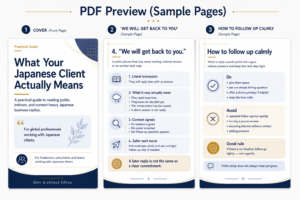
“That may be difficult” is one of the 10 reply patterns in this guide. It includes context signals, safer reply examples, and guidance on reducing pressure or offering a smaller option.
Related reading
- Japanese Client Communication: Words, Context, Signal, and Next Move
- What Does “We Will Consider It” Mean in Japanese Business Communication?
- Why Polite Japanese Business Replies Can Be Hard to Act On
Get the Decision Guide — $27
https://themindsetarchitects.gumroad.com/l/japanese-client-replies?wanted=true




コメント