You sent the proposal. They replied: “We will consider it.”
Now you are not sure whether to follow up, wait, or quietly move on — and the silence is starting to cost you time.
Why This Phrase Is Harder Than It Looks
In most business contexts, “we will consider it” signals genuine interest. The other side is reviewing. A decision is coming.
With Japanese business communication, that reading may or may not be accurate.
The phrase itself does not tell you much. What matters is the context surrounding it — what happened before the reply, how many times you have followed up, and what topic triggered it.
Getting the next move wrong in either direction carries a cost. Push too fast, and you may create discomfort that closes the door. Wait too long, and the conversation stalls without resolution.
Reading the Context, Not Just the Words
After a first proposal
If “we will consider it” arrives after your initial pitch or proposal, it may simply mean they need time to review internally. This is common. Japanese business decisions often involve multiple stakeholders, and a first reply is rarely a final answer.
Possible signal: The conversation is still open. They have not declined.
After a price discussion
If the phrase follows a pricing exchange or budget question, it may indicate the cost is difficult to accept — but they are not ready to say so directly.
Possible signal: A softer option or a smaller first step may help move things forward.
After several follow-ups
If you have already followed up two or more times and this phrase keeps appearing, it may be functioning as a polite way to slow the conversation without a direct refusal.
Possible signal: Adding more pressure at this point may not help. Reducing friction or offering a smaller commitment might.
Your Next Move Options
The phrase alone does not determine your next move. Context does. Here are four options to consider:
Wait — If this is early in the relationship or after a first proposal, giving space may be the right call. A follow-up in one to two weeks is reasonable.
“Thank you for your reply. I will wait for your team’s review. Please let me know if there is anything I can clarify in the meantime.”
Clarify — If you are unsure what is creating hesitation, a single, low-pressure question can help you understand the situation better.
“Thank you. Is there a specific point in the proposal you would like me to address, or would it be useful to schedule a short call?”
Reduce pressure — If the phrase has appeared more than once, or if a price discussion preceded it, consider offering a smaller option rather than restating the original ask.
“Understood. If it would be easier to start with a smaller scope, I am happy to put that together.”
Offer a smaller option — Sometimes a trial, a lighter version, or a shorter commitment is what makes the next step workable.
“Would a shorter trial arrangement be easier to approve internally? I can prepare that if helpful.”
What to Avoid
Treating “we will consider it” as approval is a common misstep. Responding with something like “Great — I will prepare the contract” may feel efficient on your side, but it assumes a decision that has not been made. This can create discomfort and make the other side less likely to respond directly next time.
Equally, sending a series of follow-ups in quick succession may increase pressure in a way that is counterproductive. One measured follow-up at a time tends to work better.
The Bottom Line
“We will consider it” is a holding phrase. Your job is to figure out what it is holding: genuine review time, internal hesitation, a pricing obstacle, or something else. The answer is almost always in the context, not the words.
Use what happened before the reply as your starting point. Then choose one move — wait, clarify, reduce pressure, or offer a smaller option — and give it space to land.
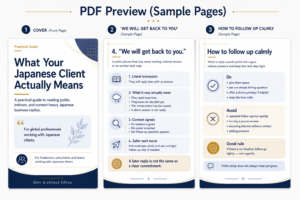
“We will consider it” is one of the 10 reply patterns covered in this guide. Each entry includes business context, a possible signal, and guidance for your next move.
Related reading
- Japanese Client Communication: Words, Context, Signal, and Next Move
- What Does “That May Be Difficult” Mean From a Japanese Client?
- What does “we will get back to you” mean in Japanese business?
Get the Decision Guide — $27
https://themindsetarchitects.gumroad.com/l/japanese-client-replies?wanted=true







コメント
コメント一覧 (3件)
[…] the exact phrasing before interpreting. A slight difference in wording — “we will consider it” versus “we will review the details” — may carry different signals once context […]
[…] “We will consider it.” — Polite and professional. But it may signal genuine interest, internal discussion that needs time, or discomfort with a specific aspect of the proposal. […]
[…] Suppose your Japanese client replies: “We will consider it internally.” […]